
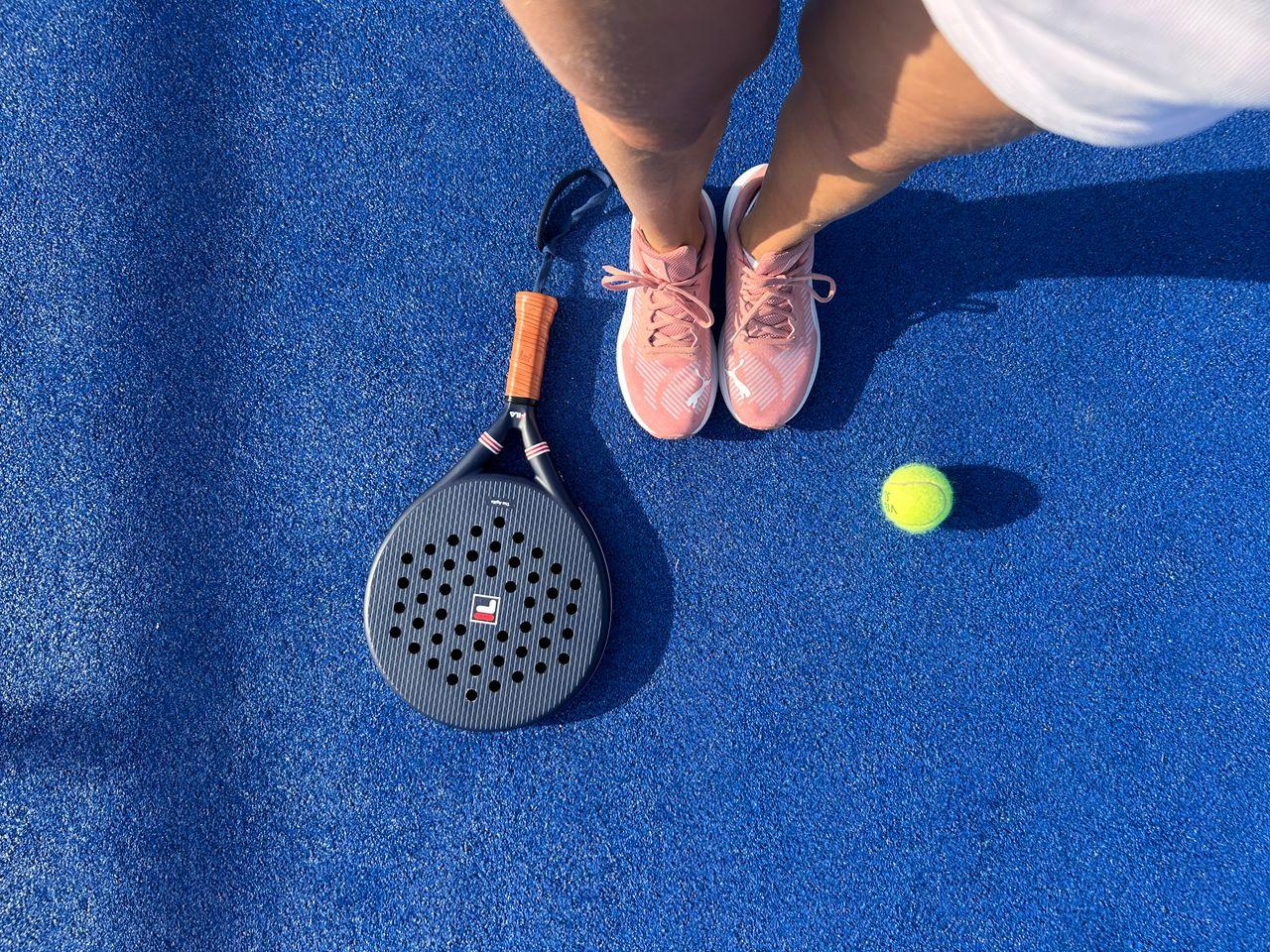
There is a sport that has quietly taken over in city after city around the world over the past few years, from the urban neighbourhoods of Madrid and Buenos Aires to the expat communities of Southeast Asia, and Bali is no exception. Padel, a racket sport that blends elements of tennis and squash within a glass-walled enclosed court, is now a firmly established part of life at Bali padel court venues scattered across areas like Canggu, Seminyak, and Uluwatu. But what exactly is padel, and what does it actually feel like to play it on an island already famous for setting a very particular kind of lifestyle standard?
Padel was invented in Mexico in 1969 by Enrique Corcuera, and for several decades it grew steadily, primarily across Spain and Latin America, before eventually spreading worldwide. The court is significantly smaller than a standard tennis court, roughly ten by twenty metres, and is enclosed by glass walls and metal mesh that become active parts of the game itself. The ball can be played off the walls in a manner similar to squash, creating a dynamic that feels fundamentally different from regular tennis. The racket is shorter and solid rather than strung, with a perforated surface that produces a different kind of control on every shot.
Why Padel Catches On So Quickly and So Completely
One of the main reasons padel has spread so fast is that its learning curve is dramatically gentler than tennis. In tennis, it can take years of practice before the game starts to feel genuinely enjoyable for a beginner. Padel works differently. The glass walls around the court act as a natural buffer that keeps the ball in play longer, meaning rallies can develop and feel satisfying even in a first session. Most people can start genuinely enjoying a game within hours of picking up a racket for the first time.
Padel is always played in doubles format, two against two, which makes it inherently social in a way that singles sports simply cannot replicate. Nobody plays padel alone. Every session involves at least four people, and this is exactly what makes it such a natural fit for the community-driven lifestyle that defines large parts of Bali. In areas like Canggu, already well established as a hub for expats from across the world, padel has become a new kind of social glue, one of the fastest ways to meet people and build connections on the island.
The fitness dimension should not be underestimated either. Despite appearing more relaxed than tennis due to the smaller court, padel is a genuinely demanding sport physically. Fast lateral movement, constantly sharpening reflexes, and rallies that can run surprisingly long make it an effective cardio and coordination workout dressed up as something that feels more like play than training.
What It Actually Feels Like to Play at a Bali Padel Court
Playing padel anywhere is enjoyable, but there is something genuinely different about the experience at a Bali padel court. The atmosphere is difficult to fully describe but easy to imagine: you are inside a glass-walled court, sweating under tropical sun filtering through an open roof, with a sea breeze drifting in from the west every few minutes, and just beyond the court fence a row of coconut palms sways slowly in the wind. When the session ends, you walk a few metres to a cafe or warung and sit down with a cold coconut in your hand.
That experience is a long way from playing padel inside a sealed indoor facility in a European city or a sterile urban sports centre. Bali adds a layer of atmosphere that no other location can quite replicate: warm tropical light, the unhurried energy that runs through the island's DNA, and a player community drawn from dozens of countries and backgrounds, making every session feel like a small cultural gathering of its own.
Many Bali padel court venues are deliberately designed with open or semi-open layouts to maximise air circulation and take advantage of the surrounding scenery. Some venues offer rice field or ocean views as the backdrop to the court, something you will genuinely not find anywhere else in the world.
The padel community in Bali is already well organised, with regular open play sessions available to anyone, periodic community tournaments, and active group chats that are always looking for players. Visitors arriving without a ready-made group of four have nothing to worry about, as the community is consistently welcoming to new players and enthusiastic about introducing the sport to anyone willing to step onto the court.
Enjoy Padel and Everything Bali Offers with Your Documents Sorted
Padel in Bali is more than a sport. It is part of a lifestyle that a growing number of foreign nationals are choosing when they decide to stay on the island longer than a standard holiday allows. For anyone who wants to make the Bali padel court a regular part of their routine, whether as a traveller extending their stay or an expat settling in for the longer term, having the right visa and residency permit in place is a foundation that should not be left to chance. The Visaloka team is ready to help you arrange all your Indonesian visa needs quickly and easily at visaloka.com, so your attention can go entirely to the things that matter more: finding a playing partner and booking your next court session.