
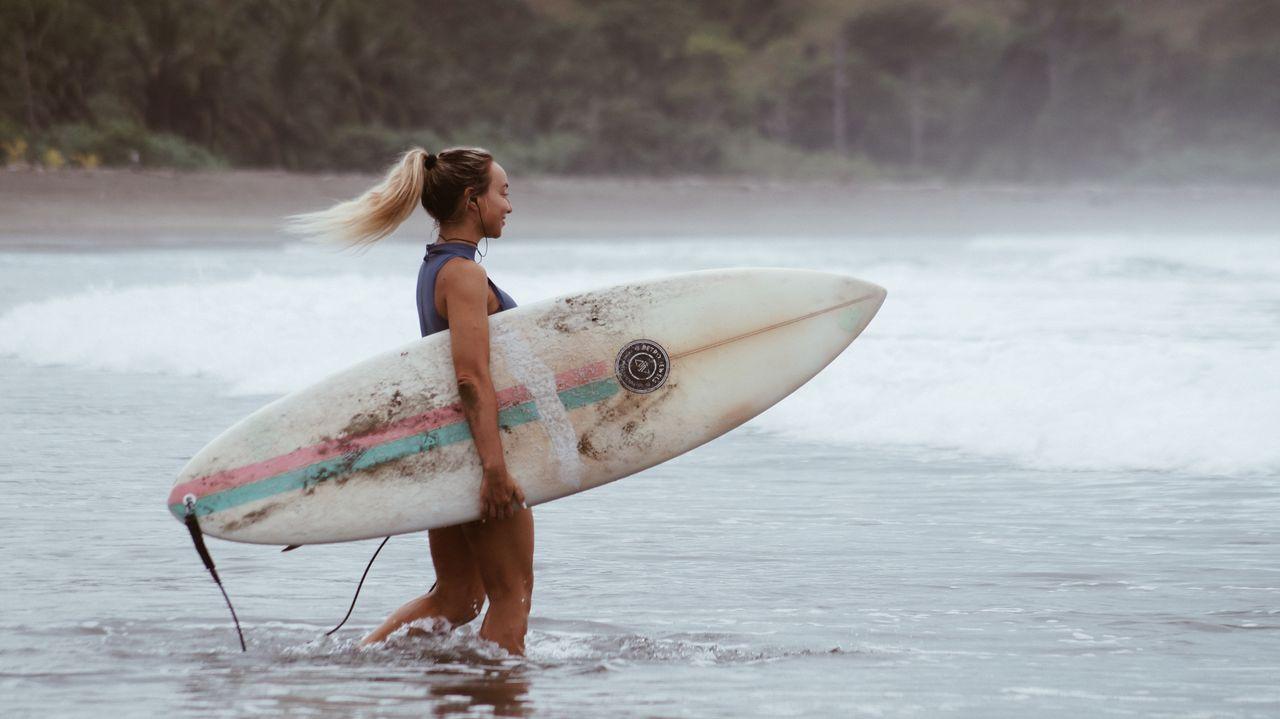
Every year, thousands of people arrive in Bali from around the world with one shared intention: this time they are actually going to learn to surf. Not just watch others glide across waves from the shore, but genuinely paddle out, get on a board, and feel what it is like to stand on a wave for the first time. Bali is chosen for that experience by more people than any other destination in Asia, and the reasons go far beyond reputation. To learn to surf in Bali is to access a combination of waves suited to every level, experienced instructors who speak multiple languages, and lesson prices that compare very favourably to international standards, all on an island that is already one of the most enjoyable places in the world to spend extended time.
Bali holds a geographical advantage that very few surf destinations anywhere can match. The island is surrounded by a combination of reef breaks and beach breaks that create very different conditions on different sides of the coastline, meaning that within a single island you can find waves perfectly suited to complete beginners in one area and genuinely world-class waves challenging enough for experienced surfers in another. Nothing has to be sacrificed, and every level is catered for.
The Best Spots to Learn to Surf in Bali for Beginners
Kuta Beach is the most logical starting point for anyone picking up a surfboard for the first time. The waves at Kuta are beach breaks, meaning they break over sand rather than reef, making them significantly safer for beginners who are still falling frequently and tumbling through the whitewater. Wave height is consistently between one and two metres throughout the year, not large enough to be intimidating but sufficient to provide the momentum a board and rider need. Hundreds of surf schools line the Kuta beachfront offering very affordable lesson packages that typically include board, rash guard, and an instructor who accompanies students directly in the water.
Legian and Seminyak, which border Kuta immediately to the north, offer similar conditions with slightly fewer crowds. For beginners who find their first session at Kuta a little too busy, moving a short distance north provides a more comfortable environment to practise without feeling constantly jostled.
Canggu, particularly at Batu Bolong Beach and Berawa Beach, is a very popular choice for beginners who are one or two steps past complete novice level. The waves are slightly more consistent and offer better variety for practising foundational techniques such as paddling, popping up, and maintaining balance on the board. The surfing community in Canggu is consistently welcoming to beginners and full of travellers and expats who are also somewhere in the learning process, which makes the environment feel genuinely encouraging rather than intimidating.
Spots for Intermediate and Experienced Surfers
For those who have moved past the beginner stage and are ready for a bigger challenge, Bali holds a collection of world-class breaks that have placed the island in the same conversation as Hawaii, Jeffrey's Bay, and Pipeline.
Uluwatu is almost always the first name mentioned in this context. The waves at Uluwatu are a reef break that produce long, consistent, powerful swells reaching well above three metres during the best swell periods of the year. Reaching the lineup at Uluwatu requires passing through a cave in the cliff and descending steep stone stairs, an experience that has become part of its own ritual for anyone who has ever surfed here. The recommended minimum level is a comfortable intermediate surfer with solid reef break experience.
Padang Padang, located a short distance from Uluwatu, is a narrower and more selective break. The waves can be extremely fast and powerful, and the entrance to the lineup runs through a tight gap between rock formations that is only accessible at certain tides. On its best days, Padang Padang produces the kind of barrel that draws surfers from every corner of the world specifically to be in that water.
Medewi on Bali's west coast is a completely different character of wave, offering a point break with long, slow-rolling swells that are ideal for intermediate surfers wanting to practise manoeuvres on a wave that gives significantly more time than any of the southern reef breaks.
Before You Paddle Out, Make Sure This One Thing Is Sorted
To learn to surf in Bali has a way of turning a planned two-week trip into something considerably longer. One successful session in the water, a warm community of fellow learners, and waves that keep calling you back is a combination that leads many visitors to extend their return tickets more than once. For those already feeling that pull, making sure the right visa is in place through Visaloka is a step worth completing earlier than most people think to. Visit visaloka.com, get your visa sorted, and let Bali and its waves take care of the rest.