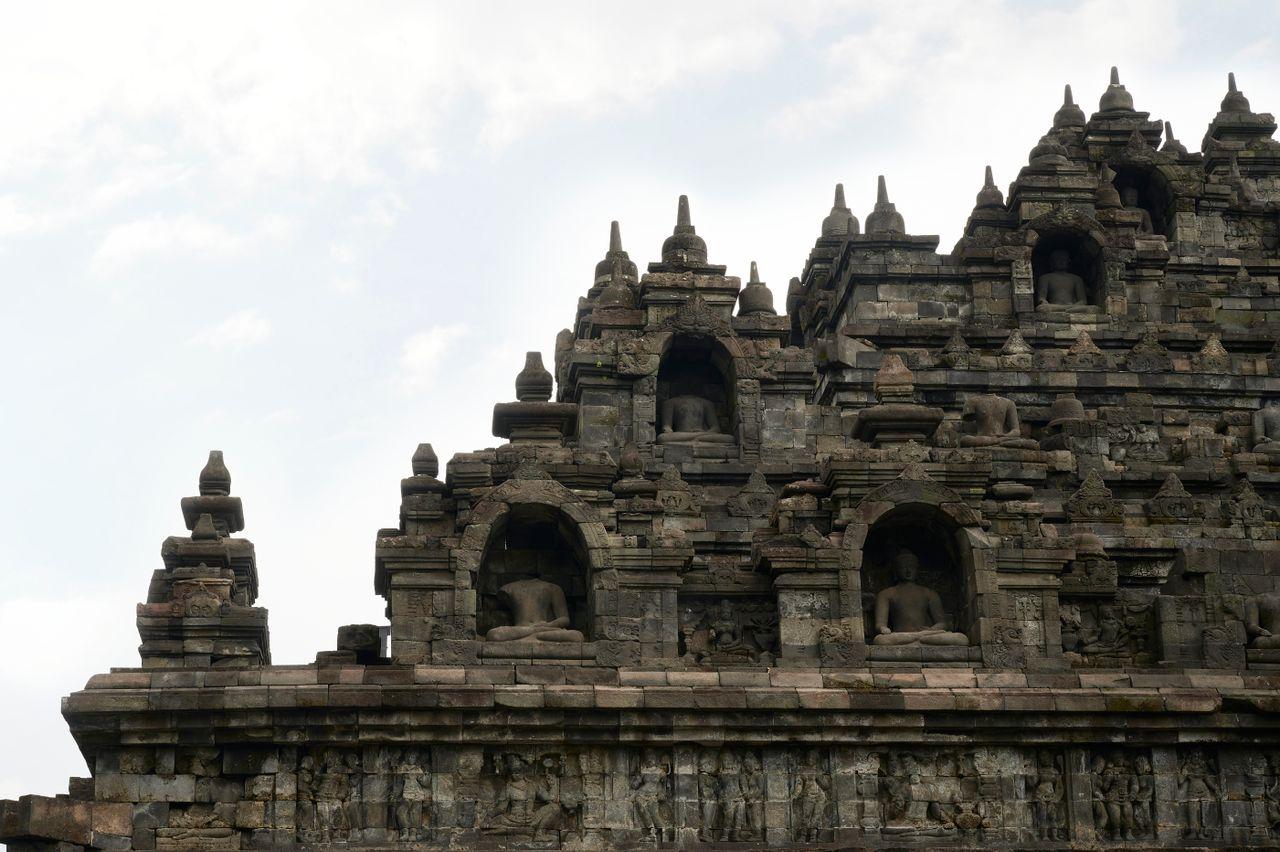
Stand on the Kedu plain before the morning mist lifts and the silhouette of Borobudur’s stupas rises slowly out of the trees. The sight is a reminder that these islands were home to powerful kingdoms long before the modern state existed. To study ancient civilizations in Indonesia is to read history through inscriptions, temples and the remains of old capitals scattered from Kalimantan and Sumatra to Java.
From the Kutai Inscriptions to the Brick Gates of Majapahit
The oldest written records in the archipelago come from East Kalimantan. Seven inscribed stone pillars known as the Yupa, written in Pallava script and the Sanskrit language, are linked to the Kingdom of Kutai Martadipura and its ruler Mulawarman. They are generally thought to date from around the fourth or fifth century CE. In West Java, the Tugu and Ciaruteun inscriptions introduce Tarumanagara, a kingdom that, according to the texts, was led by Purnawarman and carried out water projects such as digging canals.
In South Sumatra, Srivijaya grew into a maritime power that watched over trade routes through the Strait of Malacca. The Kedukan Bukit inscription, dated 682 CE and found near Palembang, is often cited as an early sign of its existence. The Chinese monk Yijing recorded that in the seventh century Srivijaya was a busy place to study Buddhism. Another site often linked to Buddhist tradition in Sumatra of the same era is Muara Jambi, a wide complex of brick temples on the banks of the Batanghari River.
In Central Java, the kingdoms of ancient Mataram left the works the world knows best. Borobudur, built around the eighth and ninth centuries under the Sailendra dynasty, carries thousands of relief panels that tell Buddhist teachings alongside scenes of daily life. Not far away, Prambanan rose around the ninth century as a Hindu complex, with main shrines for Brahma, Vishnu and Shiva and reliefs that narrate the Ramayana epic. Two monuments of different faiths standing so close together suggest that religious life at the time was fairly diverse. UNESCO inscribed both as World Heritage sites in 1991.
Power later shifted to East Java. Majapahit was founded in 1293 and reached its height in the fourteenth century under King Hayam Wuruk and his chief minister Gajah Mada. The Nagarakretagama, a text written in 1365, describes the realm, the customs of the court and the kingdom’s links with the wider world. The remains of its capital are believed to lie around Trowulan in Mojokerto, where brick gates such as Bajang Ratu and Wringin Lawang can still be seen. From Kutai to Majapahit, ancient civilizations in Indonesia clearly had many centers, not just one island.
Walking Through Ancient Civilizations in Indonesia from Temple to Temple
For a first trip, Yogyakarta and its surroundings are the most practical starting point. Borobudur, Prambanan and the hilltop Ratu Boko complex can be explored in a day or two. Arriving in the morning is usually more comfortable, with cooler air and fewer visitors. Entry rules, including the quota for climbing the Borobudur structure, can change over time, so check the latest information from the site managers before you go. Wear comfortable footwear and remember that some temples are still used for religious ceremonies, so a quiet and respectful manner is always appreciated.
If you prefer somewhere calmer, the Dieng Plateau holds small temples thought to be among the oldest in Java. On the slopes of Mount Lawu, Sukuh and Cetho temples date from the late Majapahit period and look unlike the temples of the lowlands. Both offer a different experience because of their altitude, with mist and cool air adding to the atmosphere.
Combining Central Java, East Java and a city in Sumatra clearly takes more than a few days. Foreign visitors on a tight schedule can arrange a Visa on Arrival through visaloka.com for IDR 550,000 if they are eligible, with a passport as the main requirement. Those who want to stay longer, perhaps visiting friends or family while touring heritage sites, can consider the C1 Social/Family Visit, which allows a 60-day stay, is single entry, valid for three months and can be extended.
In East Java, plan Trowulan at a relaxed pace. The gates and ancient pools are spread across a fairly large area, so a rented vehicle or a local guide helps a great deal. The museum in the area also adds context about daily life in the Majapahit capital. For Sumatra, Palembang and Muara Jambi suit travelers who have already spent some time in Indonesia and want to see another side of its maritime kingdoms.
One temple is rarely enough to understand ancient civilizations in Indonesia. Borobudur and Prambanan give a picture of ancient Mataram, Trowulan opens the story of Majapahit, and Palembang and Jambi remind us that Sumatra was once a center of trade and learning. Plan your route by kingdom rather than by city, and the story will feel far more complete.