Walking through a traditional market in Yogyakarta or following a footpath to a temple in Bali, foreign visitors will almost certainly cross paths with people in traditional dress. It might be a palace attendant in a batik wrap, a group of women carrying offerings in kebaya and sashes, or a Sasak bride paraded to the sound of music. Scenes like these tend to spark curiosity, what is the outfit called, what does it mean, and may tourists try it on. Understanding Indonesian traditional clothing before arriving makes a trip feel more meaningful, and helps visitors behave appropriately in the places they visit.
Indonesia is home to hundreds of ethnic groups, and almost every region has its own distinctive dress, with its own fabrics, colors, and rules about when to wear it. So there is no single outfit that represents the whole country. What exists is a mosaic, and some pieces of it can be seen first hand in the destinations tourists love most.
Indonesian Traditional Clothing You Can Meet in Three Favorite Destinations
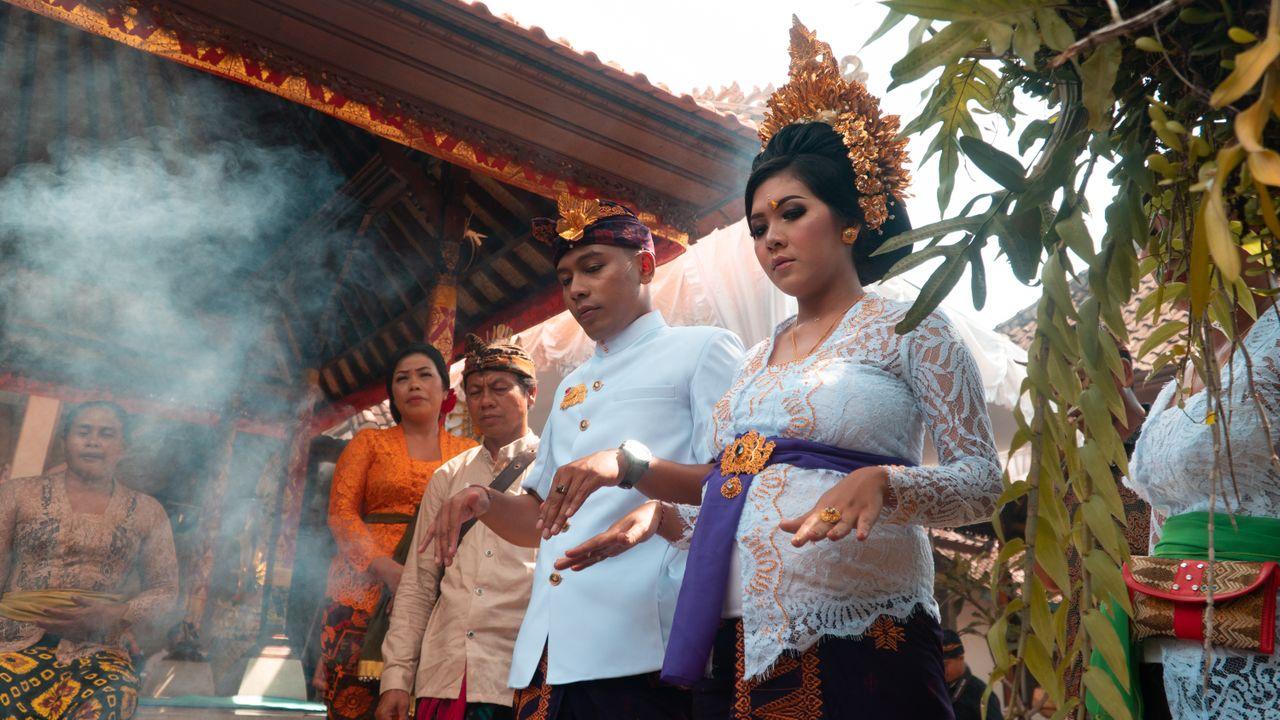
In Bali, the cloth wrapped around the waist is called kamen, and it forms the base of dress for both temple visits and ceremonies. Women usually pair it with a kebaya and a waist sash, while men wear an udeng, the Balinese headcloth, plus a saput, or outer cloth, and a shirt. For weddings and major ceremonies there is a far grander outfit called payas agung, complete with a crown and golden ornaments. Visitors to temples are generally asked to wear a cloth and waist sash. At many temples popular with tourists, these are provided or can be rented at the entrance. White and yellow are the colors most often seen during prayers.
Yogyakarta has a dress tradition closely tied to its royal palace. Women wear a kebaya with a batik cloth known as jarik and hair styled in a bun, while men wear a beskap jacket, a jarik, and a blangkon, a shaped batik headcover. Batik itself was inscribed by UNESCO as intangible cultural heritage in 2009, and some classic motifs were once associated with the royal court. At batik centers and workshops, visitors can watch the process up close, and even try drawing hot wax onto cloth with a canting.
In Lombok, the Sasak people have dress that differs from both Java and Bali. Women wear the lambung, a black top, with woven cloth or songket. Men wear the pegon, a traditional jacket, with a sapuk headcloth and a sarong. This attire is easiest to spot during nyongkolan, a wedding procession accompanied by gendang beleq drums. To see how the cloth is made, Sukarara Village in Central Lombok is known as a songket weaving center.
Exploring all three regions in one trip, say Bali, then Yogyakarta, then Lombok, ideally calls for a fairly long stay. Travelers with a plan like that could consider the C1 visa, which allows a stay of up to 60 days and can be applied for online through Visaloka before departure, so paperwork does not eat into time better spent watching ceremonies and hunting for woven cloth.
Regional Dress Elsewhere in the Archipelago Worth Knowing
Beyond those three, Indonesian traditional clothing from other regions is worth getting to know, especially for travelers whose route passes through Sumatra or the Nusa Tenggara islands. In West Sumatra, Minangkabau women are known for the tingkuluak tanduak, a headcloth shaped like buffalo horns, worn with songket at traditional ceremonies. In North Sumatra, the Batak people have the ulos, a woven cloth that is both worn and given during many ceremonies as a sign of affection and blessing. Sumba in East Nusa Tenggara is famous for ikat weaving whose motifs carry deep meaning, while in Jakarta, the Betawi kebaya encim features a V neckline and fine embroidery that blends Chinese and Betawi culture.
The kebaya itself was added to UNESCO’s Intangible Cultural Heritage list on 4 December 2024 through a joint nomination by Indonesia, Brunei, Malaysia, Singapore, and Thailand. Indonesia also marks National Kebaya Day every 24 July. For tourists, the kebaya is the easiest doorway into traditional dress, since versions of it are worn in many regions, each with its own variation.
For anyone wanting to wear Indonesian traditional clothing as part of a travel experience, a few things are worth keeping in mind. Choose a reputable rental shop or photo studio, and ask first whether the outfit may leave the studio. Avoid wearing sacred ceremonial attire to places where it does not belong. When watching a ceremony, ask permission before photographing people, and do not push through processions. Fabrics such as songket and hand drawn batik are usually fairly thick, so bring water and pick mornings or late afternoons for photos.
If bringing cloth home as a souvenir, ask about the difference between hand drawn batik, stamped batik, and printed fabric with a batik style pattern, since prices can differ enormously. Artisans at weaving centers are usually happy to explain their techniques and the meaning of motifs, so do not hesitate to ask before bargaining.
In the end, Indonesian traditional clothing is more than material for holiday photos. A single piece of cloth can hold a region of origin, a social role, even the wearer’s prayers. Visitors who ask questions, watch how the cloth is made, and dress with respect tend to go home with stories far richer than a social media post.